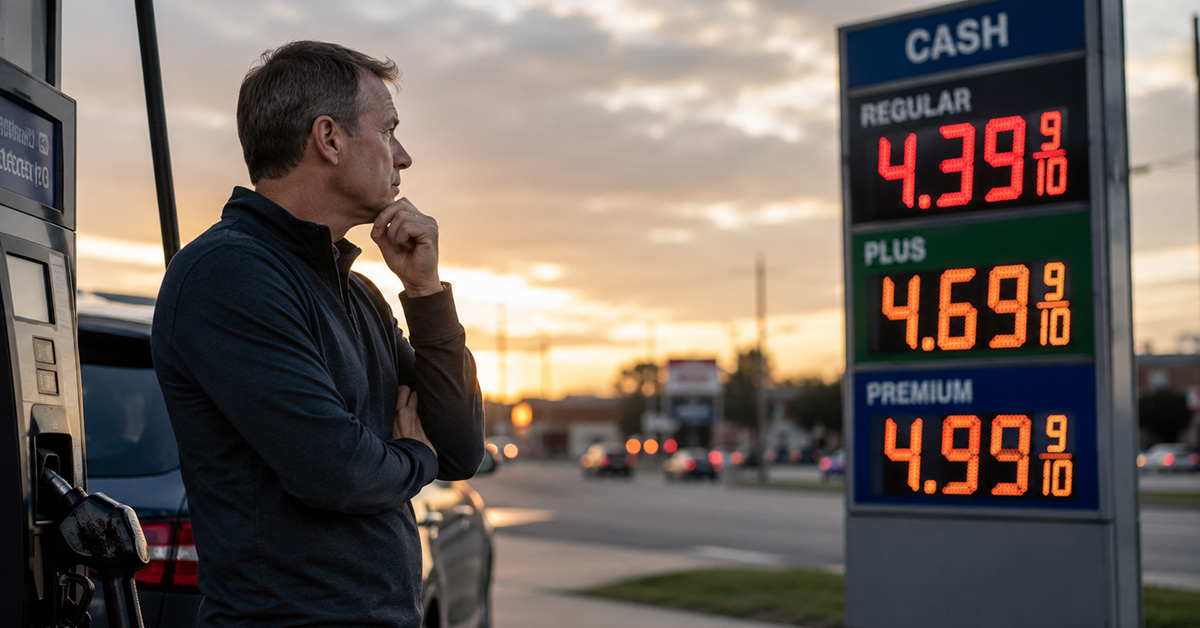

When oil prices rise sharply, the reaction is almost automatic. Concern. Headlines. A sense that something important is changing. And then, often, action. Investors adjust portfolios. They chase perceived winners. They reduce exposure to perceived risks. They assume that what is happening now will continue.
That last assumption is where the real problem begins.
Three Common Mistakes
First, a fact of history: not all oil shocks are created equal. Some are driven by demand. Strong economies consume more energy, pushing prices higher. In those periods, rising oil often coincides with rising equity markets.
Others are driven by disruption. Supply constraints, geopolitical tension, or logistical bottlenecks push prices higher even as growth slows. Those are very different environments from those we find on the demand side. But in the moment, when the headlines blare and the pundits pontificate, they can feel the same.
Another common mistake is reacting to the first move. Oil prices tend to move quickly. Markets react. Headlines amplify the move. And investors feel pressure to respond. But the first move is rarely the most impactful one.
The second-order effects, inflation, interest rates, margin pressure, and consumer behavior, take time to develop. By the time they are fully visible, markets have often already adjusted. Reacting to the first signal almost always means acting on incomplete information. In other words, speculating. Predicting the future. Maybe gambling is the best word.
The third mistake is assuming trend persistence, and this may be the most expensive mistake of all. When oil rises, it feels like it will keep rising. Not just oil, of course. Gold, crypto, Miami condos, even Beanie Babies. This mistake is often driven by FOMO, an age-old condition that has a new name. You want in on the action. Charles Ponzi understood that condition very well. As did Bernie Madoff.
Just as when they rise, when markets fall, it feels like they will keep falling. But history suggests otherwise. Many oil spikes are driven by temporary conditions: geopolitical risk premiums, short-term supply disruptions, or market overreactions. When those conditions resolve, prices tend to normalize. Not immediately, but over time.
Living in a Cautionary Tale
The recent rise in oil prices illustrates this dynamic. Geopolitical tensions drove crude higher as markets priced in potential disruption. At the same time, equity markets initially reacted, then stabilized, and in some cases moved higher. Since the kinetic war in Iran started on February 28th, the price of a barrel has risen from about $70 per barrel to over $100 and the S&P 500 has risen by 8% (as of May 8).
That fact pattern is telling. It suggests that investors, collectively, may view the current environment as a temporary shock rather than a structural shift. That may or may not prove correct, but it highlights an important point: markets are not just reacting to prices; they are interpreting them.
For investors, the goal should not be to predict every move in oil. The goal should be to ask better questions: Is this demand-driven or supply-driven? Is this structural or temporary? What are the likely second-order effects? How much of this is already priced into markets?
These questions shift the focus from reaction to interpretation.
The real insight we’d offer is this: oil prices are not instructions, they’re information. They’re decision inputs. And like all information, their value depends on how they are interpreted.
Energy shocks will continue to happen. They always have. The investors who navigate them best are not the ones who react fastest. They are the ones who understand what they are seeing and what it actually means.