
The Timeless Psychology of Market Manias
In April 2026, a struggling shoe company called Allbirds announced it was rebranding as “NewBird AI” and pivoting toward compute infrastructure. The company had no meaningful AI business to speak of, but that didn’t matter. Retail traders piled in anyway, and the stock ran from roughly $2.50 to as high as $24, a nearly tenfold move, driven almost entirely by two letters attached to the company name.
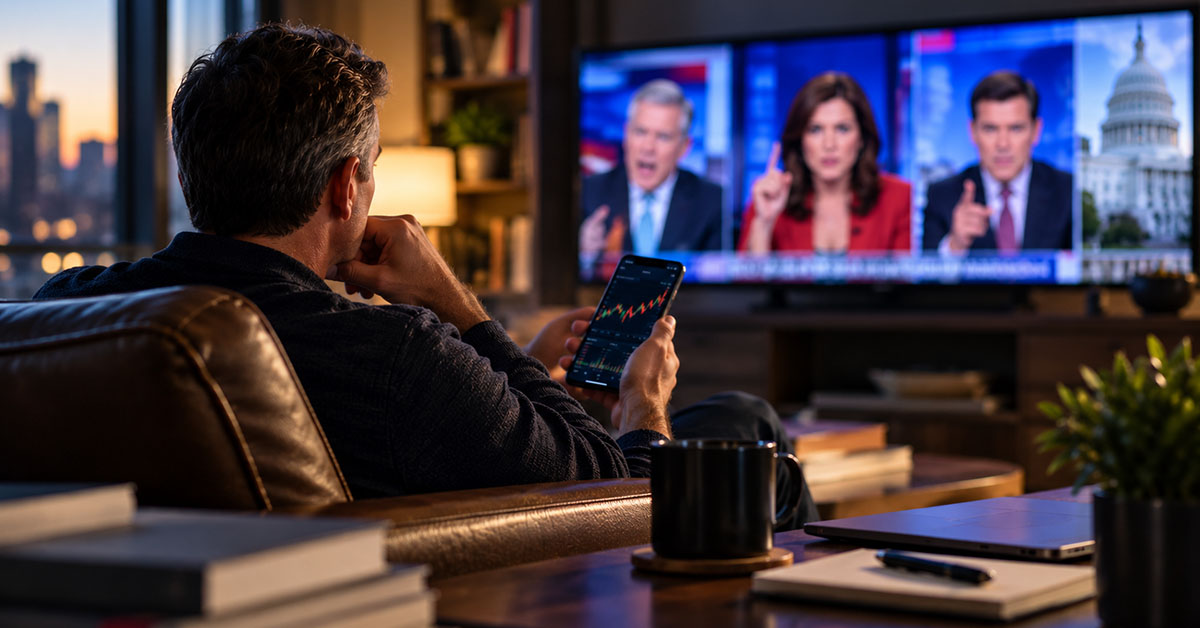
If that story sounds familiar, it should. It’s the same psychological engine that drove GameStop five years earlier, and it points to something worth understanding before it shows up in a portfolio decision that actually matters. Markets are not just calculators processing information. They are crowds of people, and crowds have a psychology distinct from the individuals inside them.
Madness, ca. 1841
The Scottish poet, journalist, and author Charles Mackay wrote his masterwork in 1841. The book was a catalogue of centuries of human folly—tulip bulbs selling for the price of houses in 17th-century Holland, fortunes built and lost overnight on rumors of a French trading company that barely existed, entire towns convinced that alchemy or prophecy was about to change the world. Extraordinary Popular Delusions and the Madness of Crowds became a landmark of behavioral psychology a full century before the term existed. His central insight was simple and has never stopped being true: people think in herds, and a belief, once shared widely enough, can become self-reinforcing regardless of whether it was ever grounded in anything real.
In January 2021, a struggling video game retailer, heavily shorted by hedge funds, became the subject of a coordinated buying campaign organized almost entirely on a single Reddit forum. Short interest in the stock exceeded 100% of available shares, meaning more shares had been bet against the stock than technically existed. Retail investors, many trading for the first time, piled in not because of anything happening inside the company, but because of what was happening in the crowd around the stock. The price went from under $20 to over $480 in a matter of weeks. Hedge funds that had bet against GameStop lost billions covering their positions. And it wasn’t really about GameStop at all. Bed Bath & Beyond, AMC, BlackBerry, and a rotating cast of otherwise unremarkable companies, now known as meme stocks, caught the same wave in the months that followed.
The mechanism was FOMO, plain and simple—the fear of missing out on what everyone else seemed to already be part of. Researchers who studied the episode afterward found a telling detail. Investors who got in early sometimes did very well, but the median investor who bought in after the initial surge peaked lost roughly 13%. The crowd that created the mania was, in the end, mostly the crowd that absorbed its losses.
It’s All Psychological
The same engine resurfaced in the crypto and NFT boom later that year, when digital collectibles sold for millions of dollars on the strength of social proof alone, and in Dogecoin, a currency literally created as a joke, briefly reaching a market capitalization in the tens of billions. A regulatory change earlier this year removing friction from rapid-fire retail trading has been directly credited with reviving the pattern again. Allbirds is simply this cycle’s most vivid example.
Five years after GameStop, retail trading now accounts for close to 20% of average daily U.S. equity volume, up from low single digits before the pandemic. This looks like a permanent structural shift in who moves markets, not a one-time event. The tools keep changing, but the psychology hasn’t.
It would be easy to file all of this under “amusing,” a curiosity involving stocks a disciplined investor was never going to touch anyway. But the more consequential version of this pattern is happening right now, inside the AI trade itself—the one theme millions of portfolios actually have real exposure to. Retail speculation has started applying the same memecoin-style trading behavior to legitimate AI-adjacent names, treating genuine businesses with the same viral, momentum-driven psychology that turned a shoe company into an overnight AI stock. That’s a materially different risk than a struggling retailer catching a Reddit wave; it’s the crowd psychology merging directly with a theme that deserves serious analysis, not speculative fervor.
Mackay’s observation wasn’t that foolish people go mad in herds. It’s that otherwise rational people go mad in herds, and recover their senses slowly, one at a time, usually after the damage is done. Knowing about that bias, behavioral economists have found, is not the same as being immune to it in the moment, even for people who fully understand the concept on paper.
There Is an Antidote
The antidote to herding isn’t cynicism about markets, or treating every rally as a mania in disguise. Real, fundamentals-driven AI investment is not the same phenomenon as a shoe company’s ticker symbol. The antidote is a habit of mind: pausing to ask whether a price is moving because something real has changed, or because enough people simply believe it has. That’s the same question worth asking about a calendar month with a bad reputation, a stock trending on social media, or a story repeated so often it starts to feel like fact.
Three centuries after tulip mania and five years after GameStop, the lesson hasn’t changed, because the thing being studied—human behavior under the influence of a crowd—hasn’t changed either. The families and advisors who navigate these moments well aren’t the ones who never feel the pull. They’re the ones who’ve built the habit of thinking things through before they act.